
January 27
Seeking out truth at the dentist

“City artists, city writers but not composing in a city register. They are not manic. The work does not seek society. Not especially active in the life of the street. They are in season. They are headed straight for the center of some unnameable flower.” [Italics mine hehehehehe]
— C.D. Wright
It seems significant to me, I recognize occasionally, that since I ostentatiously and falsely began the pantomime of stomping away, Vaudeville-style, from my folie à deux with God, that poetry has vacated the premises, somewhat. “Here I go! I’m really leaving! I am really normal and sane now! I would never obsessively beg for God’s hand on my thigh every three seconds, that’s something I would never do! Me drink alcohol and wear thong like cool normal girl!” Whisked off the stage by God’s cane. And in so doing, some irreducibly true part of my dumb self’s lexicon whisked with it. If fundamentalism is a lineage of permanent children, people permanently and choicefully benighted by a life under a blanket of the past, prairie blanket and calico, closing their eyes “I do not see it” style, then it follows that the epigenetic software of my mind is at its linguistic nativity in that childlike state, where mystery is preserved forever because nothing, quite literally, exists beyond that living moment of reverie. Poetry being one such state, the relief of letting go of explanation in service of rendering reality in big, clear slashes. Limbs swinging from tree to tree.
Poetry also being, for me at least, something of a mystical process more than a product. This line that I wrote in August of 2016, the year Meta has now planted in our minds as worthy of nostalgia: “I see my virginity in a room somewhere, labeled in a tube with someone’s dagger handwriting.” How did I know that? I can’t remember how I knew that, or how this came out of me, only that I bore down, the way they tell you to do if something gets stuck in your vaginal canal, and I closed my eyes, and everything unspeakable in me turned into a translated version of the truth. How it used to feel, the times I was assigned to provide live interpretation of a meeting from Bulgarian to English and English to Bulgarian: never more familiar or soothing, O Lord, to turn like lightning one page of truth to the other: book, eye, forgiveness, shirt, door, voucher. How I hid in translation like a child among tall grasses.
Anyway, it is likely that we are all nostalgic for 2016 because one of the great meta-gods that rules our lives planted this idea in a way such that it would seem organic, native, but in reality because such longitudinal data — a span of a decade being the building block of all data science — is incredibly valuable, particularly when we are all convinced that its span is our choice, our poetry, our instinctive native speaker’s wisdom. From such data, one can extrapolate almost anything: how to best extract the highest price on medical services, and when, and under what conditions. From such data, our corporation-gods can steal more and more of our future, and hide it in the earth like cursed treasure, their ugly bunkers.
Someone on TikTok said that self-awareness is anathema to audience-building. Or else its core building-block. You have to be delusional, you have to know as little as possible, you have to collapse your skull to allow miracles in — which is also, by the way, the condition of god-seeking. “It is almost impossible not to make judgments on the existence of miraculous events when speaking of history that is founded on a claim to miraculous events,” said the historian of Mormonism, in the foreword to the book. It was a logistical note, alongside others about chosen verbiage and naming conventions, alluding to the hysterical fact that it is impossible to render my people’s heritage without dignifying the idea of visions and miracles with a response. It is as logical to us as water and paper: yes, simply read the account and pray about it, simply understand what miracles bind you in your garments. Consider, brothers and sisters, the small fry for 2.99: the potato, the earth, the hands that drew it, the shipping container that brought it over unfathomable seas, guided by the hand of Jehovah. Selah.
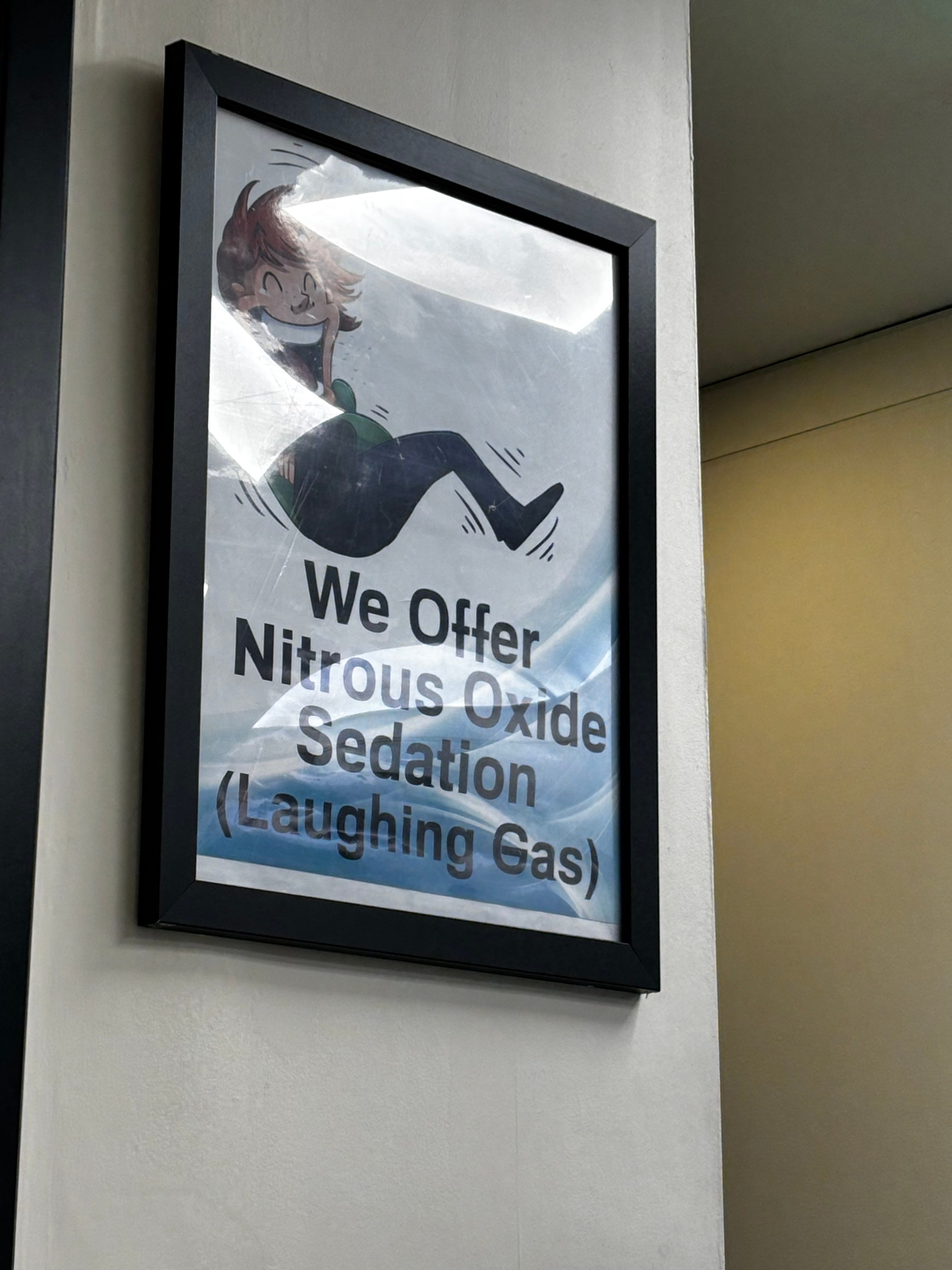
The shitty low-cost dentist was located in one of those unfathomable Yorkville mixed use megabuildings, the kind I never frequent, with their walls of mail slots and haggard looking old guys walking their dogs and the inevitable blonde teenager in a backpack that said “Dalton” (the name? the school?) and one earbud trying to make music-related conversation with the inevitable non-white doorman. Salty and shaking with the cold, as if I had just emerged from the ocean, I paced the shining brown lobby in circles like a lost pilgrim. “Can I help you?” wearily asked the guy at the desk eventually. “I’m looking for…a … dentist?” I asked, as if asking for assistance with the casting of a rune. He pointed out the hidden non-residential elevator. “I wasn’t feeling well, so I didn’t come in,” the doorman was saying to the Dalton kid, of his absence. “Like… you had business going on, or you really weren’t feeling well?” “No,” said the doorman, adjusting his cap, looking bored, “I just felt like, with the cold and all…I didn’t come in.” It was the world’s most boring conversation, but I couldn’t stop probing it for clues, while I waited for the doors to open and my teeth to be inspected. Some truth waiting to be revealed.
I haven't written poetry since high school. I love poetry but don't read it. This has become a mystery to me, and now here is a clue.